
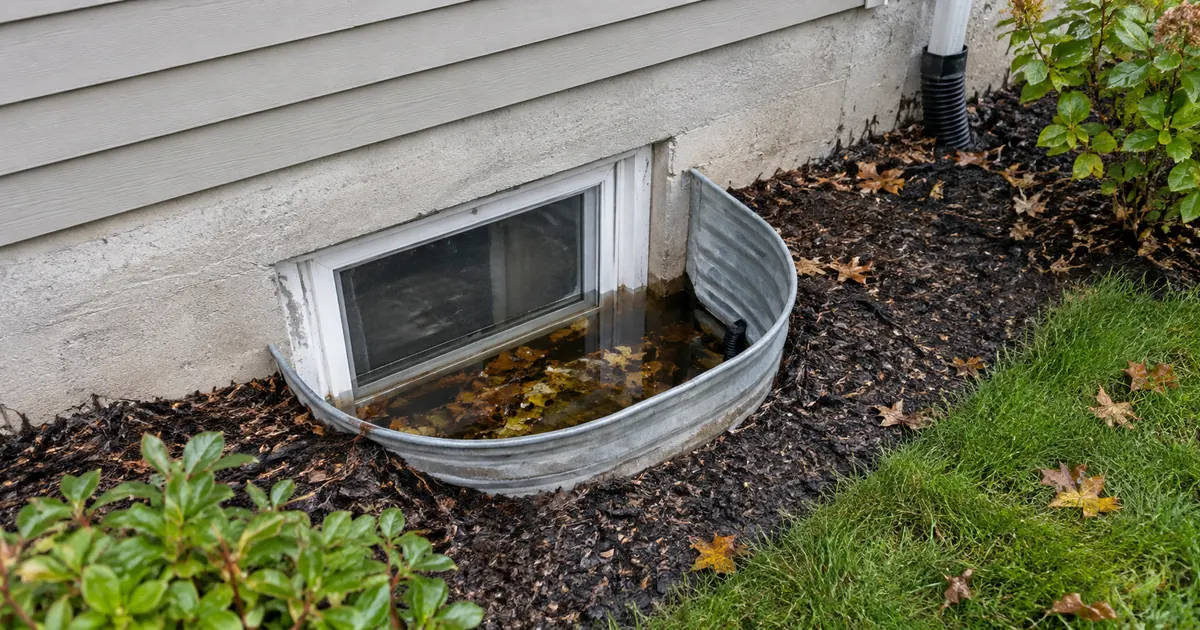
What “weeping tile” means
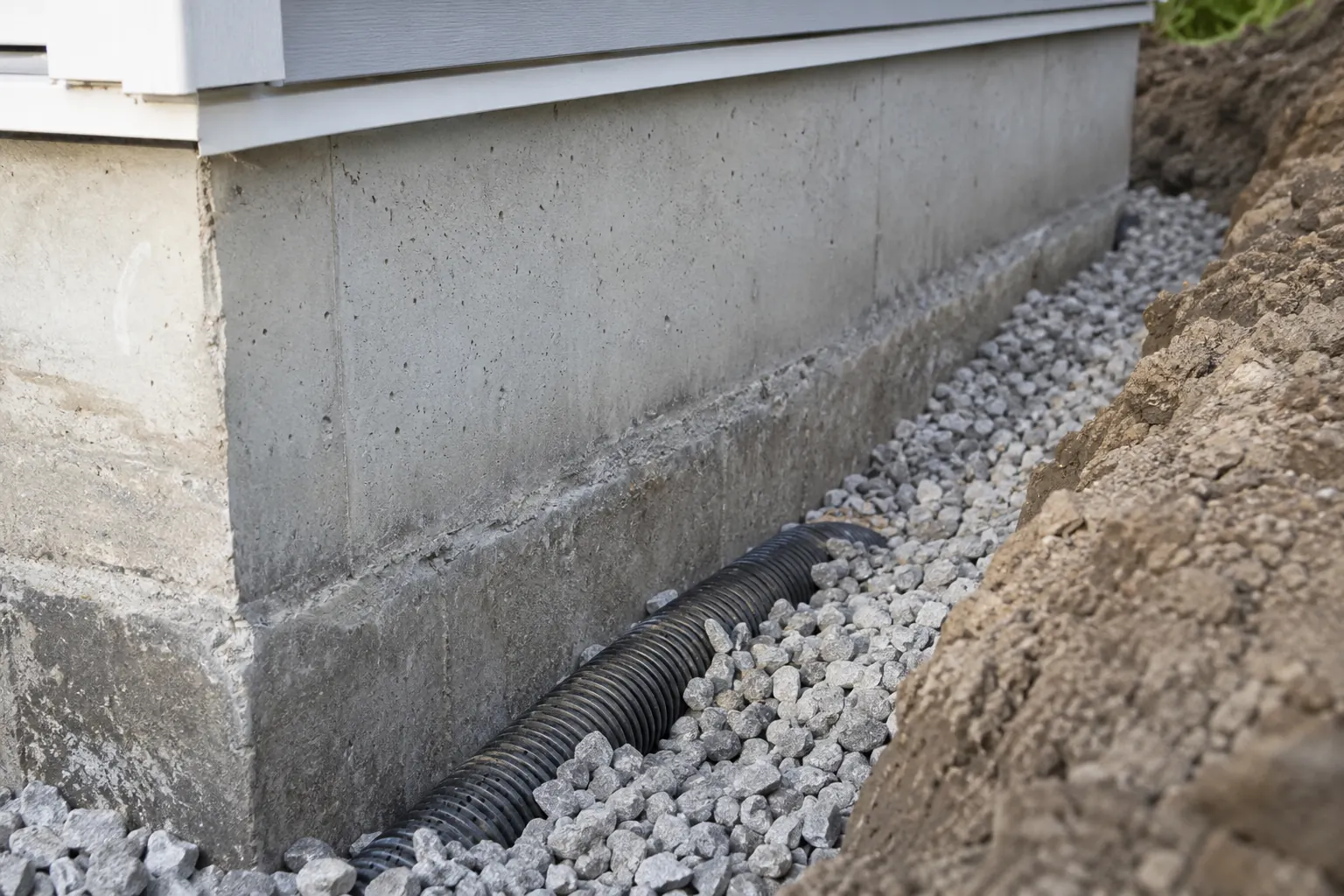
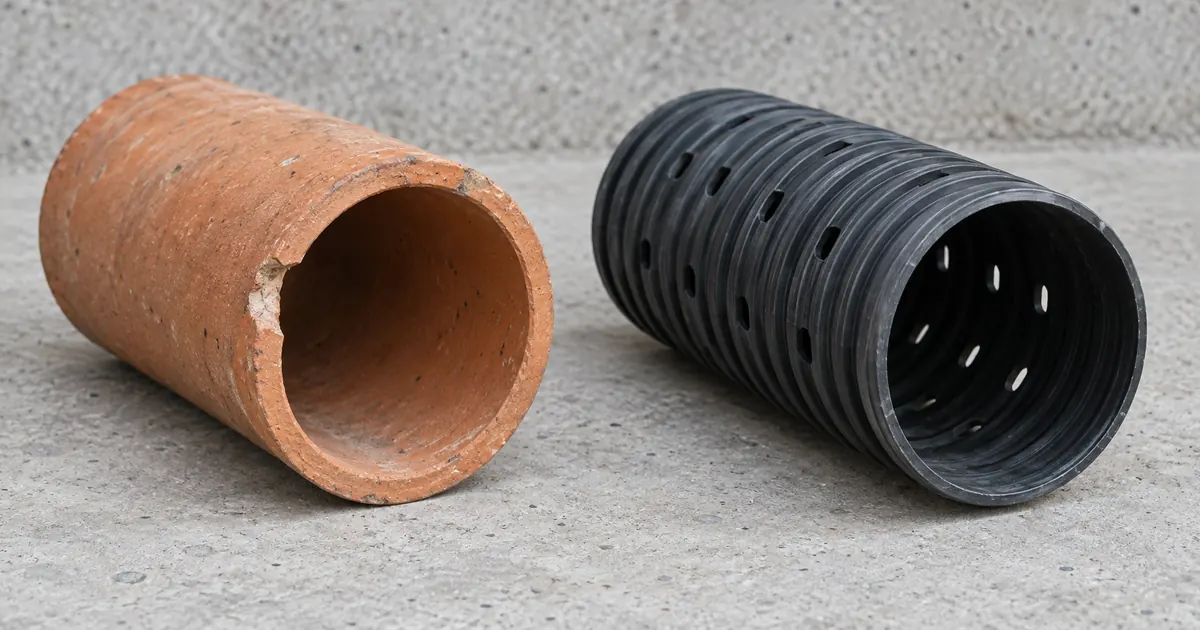
Despite the name, a foundation drain may use older rigid sections or newer perforated drainage pipe. Its purpose is to collect water in the intended drainage zone and provide a route away from the foundation area. The surrounding material, location and outlet all affect the arrangement.
A foundation drain is not automatically the same as a shallow landscape drain or a yard French drain. Surface-drainage work and foundation-drainage work can interact, but they occupy different positions and may connect to different outlets. Ask the contractor to identify the actual system being discussed.
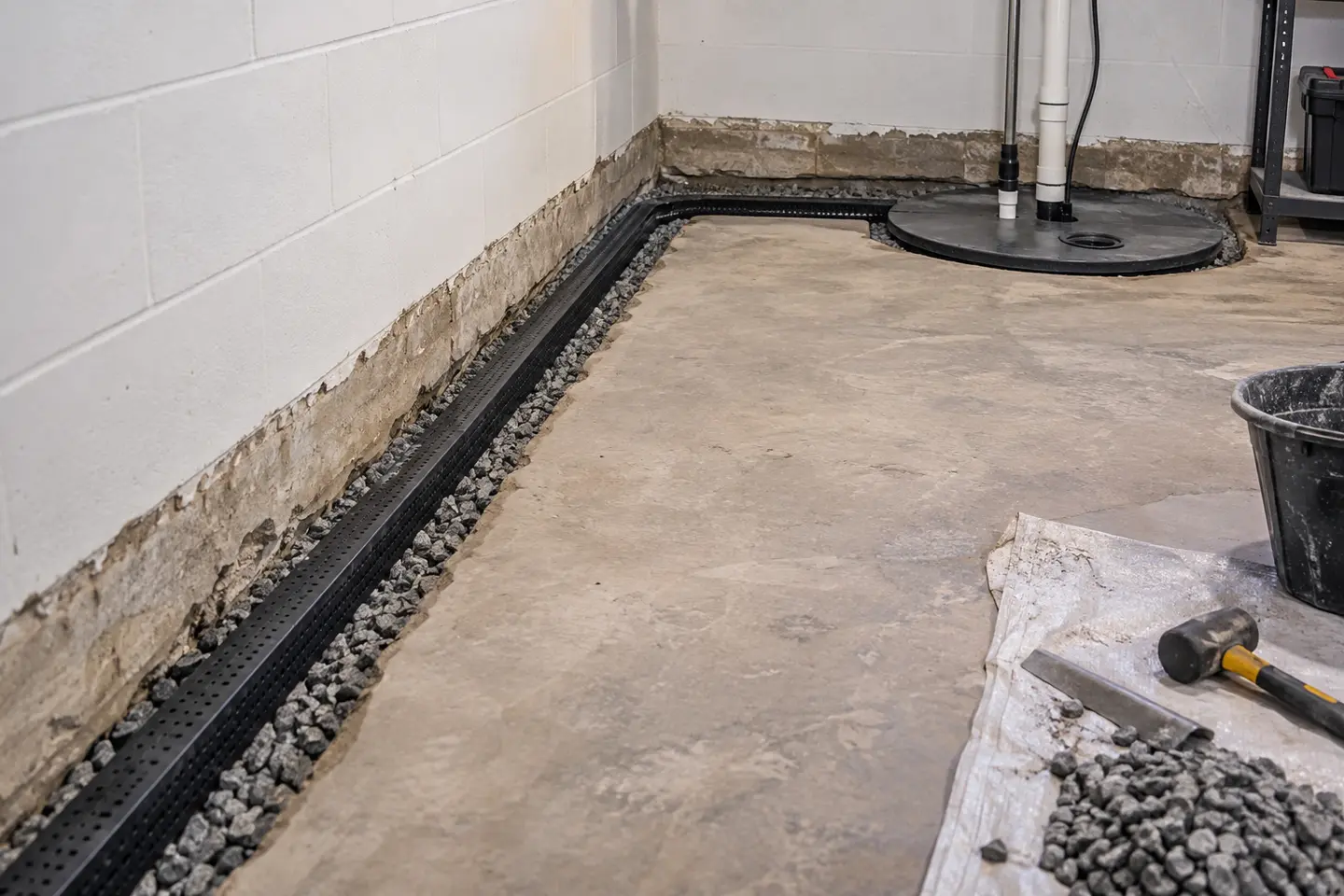
An interior perimeter collector is also distinct from an exterior foundation drain. Both may be described casually as “weeping tile.” Clarifying the location prevents misunderstandings about excavation, floor opening, connections and municipal program eligibility.
Signs that support an investigation
Repeated water near the wall-floor joint, concerns about an existing outlet, or recurring seepage after earlier repairs can justify reviewing foundation drainage. Those observations do not establish which section is affected or whether the pipe itself is the main issue.
Water can also enter through a crack, window opening or another route. A basement leak assessment should distinguish visible evidence from assumptions before a full replacement is proposed. The nearest wet area is not necessarily the location of a concealed drain defect.
Useful background includes previous waterproofing invoices, known sump connections, additions, drainage alterations and the timing of wet conditions. You do not need to dig, open a floor or enter an unsafe space to prepare this information.
What an inspection can and cannot show
Inspection depends on access and system configuration. Some portions may be visible or reachable through existing access, while others remain concealed. A contractor should explain the proposed method, the area it can examine and the limits of the findings.
If a camera or other investigation is proposed, ask which run will be examined, whether it is accessible and how the results relate to the intended drainage route. An inaccessible or obstructed section may limit the view. A finding in one portion should not be presented as proof of the condition of every concealed section.
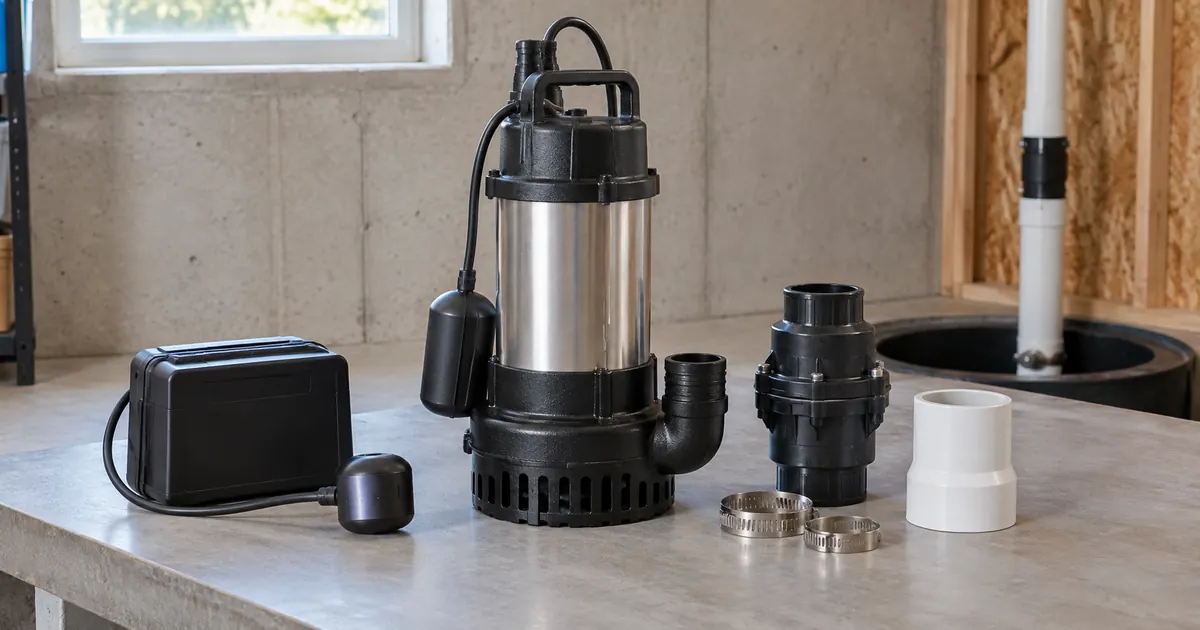
The outlet needs particular attention. A replacement collector cannot perform its intended role if the downstream connection is unsuitable or the receiving system cannot carry the water away. Where pumping is involved, include the sump and discharge arrangement in the review.
Local repair or broader replacement?
A localized repair may be considered when a specific defect is identified and the remaining arrangement can be assessed sufficiently. Broader replacement may be discussed when access, deterioration, multiple defects or unsuitable connections make a limited repair impractical. The recommendation should explain those findings.
| Question | Why it changes the scope |
|---|---|
| Where is the drain located? | Outside access and inside floor opening involve different work and restoration. |
| What is actually known about the defect? | Confirmed local damage differs from an unverified assumption about the whole perimeter. |
| What can remain in service? | Reused sections and connections need a stated basis for acceptance. |
| Where does water leave the system? | The outlet may require its own repair, connection review or pumping work. |
| Which surfaces must be disturbed? | Driveways, decks, landscaping and finished rooms can affect access and cost. |
Ask how new and retained sections will connect and how that part of the work will be checked. The proposal should define the treatment boundaries and any unresolved conditions that could change the job.
Outside work, inside work and restoration
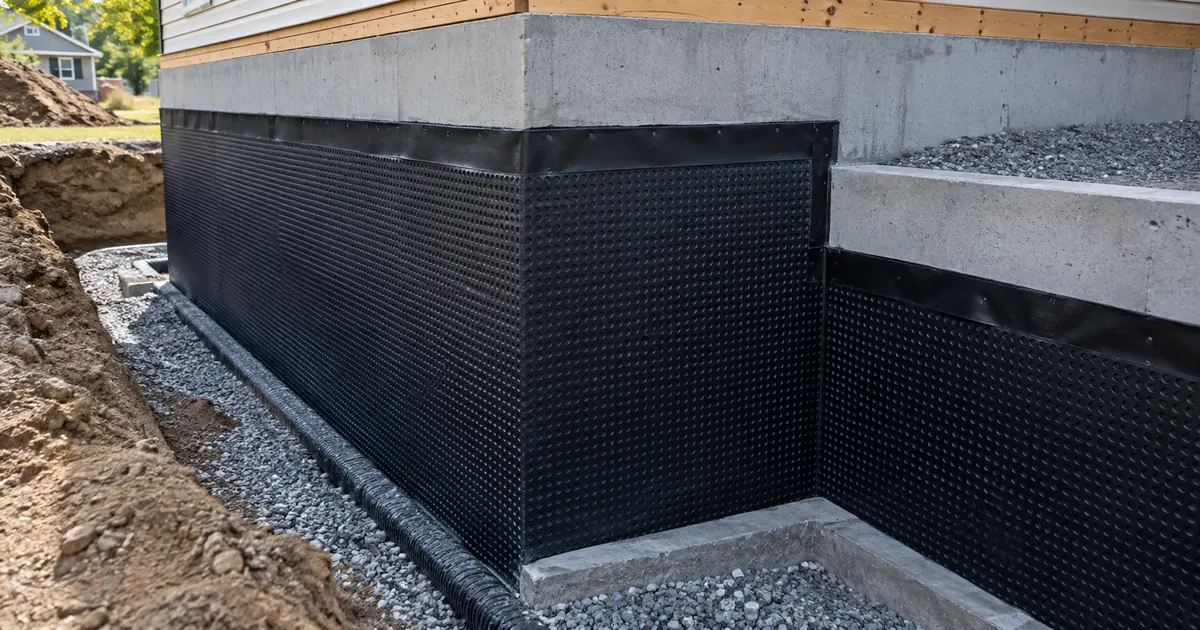
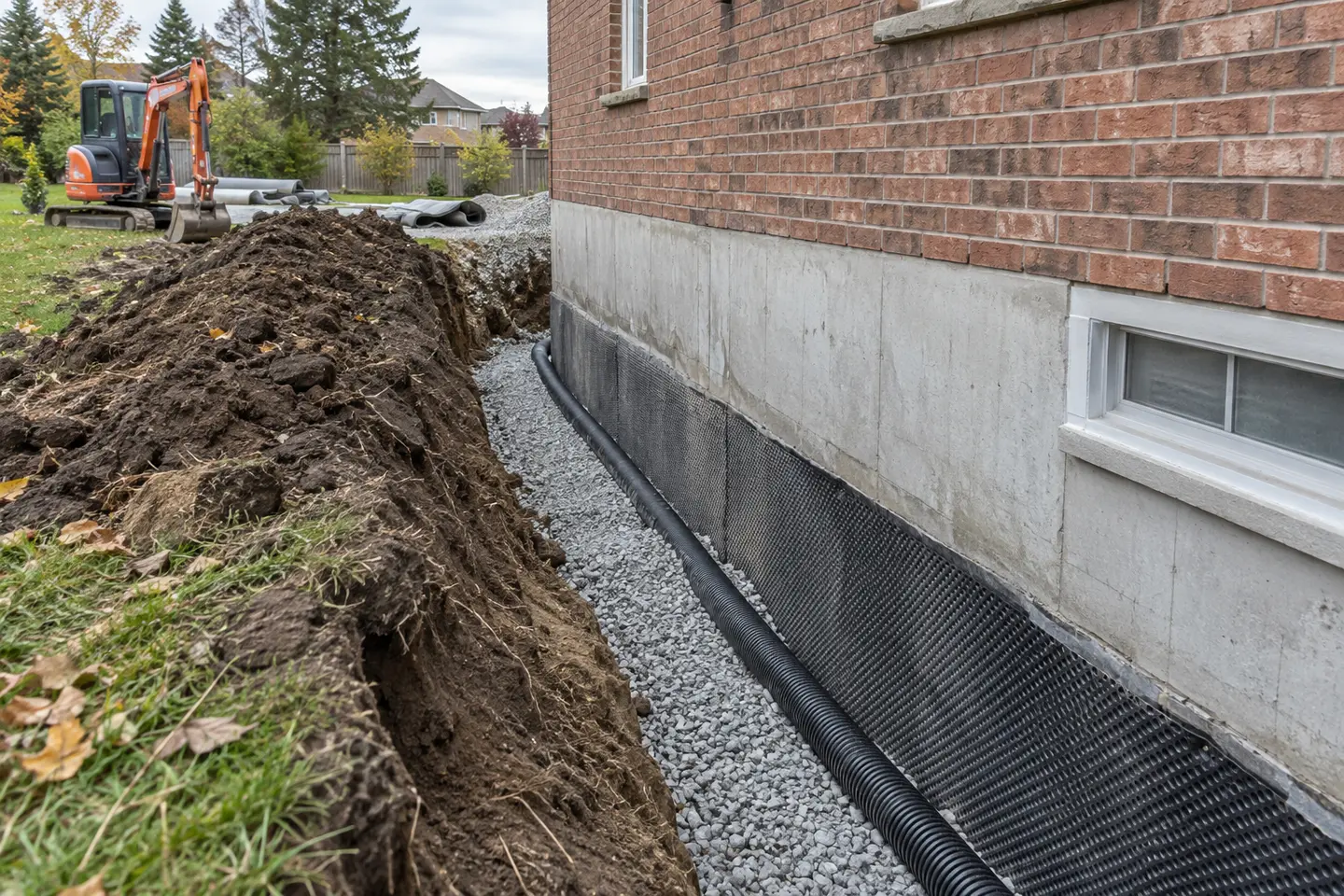
Outside foundation-drain replacement can involve excavation beside the footing, wall access and reinstatement of disturbed surfaces. It may be coordinated with exterior foundation waterproofing, but the drain and wall-treatment scope should each be described.
An interior system can require opening the floor edge, access along walls and a suitable collection outlet. It does not replace the outside wall barrier or establish the condition of an inaccessible exterior drain. Compare these approaches based on the property’s findings and access.
Restoration needs a clear boundary. Concrete floor reinstatement is different from replacement of finished flooring. Backfill is different from landscaping or matching paving. Include disposal, protection of nearby utilities and responsibility for moving or rebuilding obstructions in the written estimate.
Local connections and permissions
Mississauga properties can have different foundation-drain and stormwater arrangements. Previous modifications may not be apparent from the current room layout. Shared elements, condo ownership or drainage serving several areas require particular care before a connection is changed.
The City’s prevention rebate excludes weeping-tile repair and replacement. Other qualifying measures may involve specific existing connections and separate conditions. Our rebate and permit guide links to the official rules and distinguishes program approval from permits for the proposed work.
Ask who confirms the complete approval scope and who arranges any required inspections. Do not assume a repair name alone tells you whether plumbing, excavation or other approvals apply.
Before accepting a proposal
Check the measured extent, inside or outside location, materials, connections, outlet, access, disposal and restoration. Ask what inspection or verification is included and how concealed-condition changes will be agreed. The quote-comparison guide can help organize these questions.
Does older tile always need replacement?
No. Age or material alone does not establish condition. The findings and suitability of the connected system should support the recommendation.
Will a new drain fix every basement leak?
No. Window, wall, plumbing and reverse-flow routes may need different measures. A broader assessment can help prioritize several concerns.
A clearer next step
Tell us what is happening in your basement.
Where does the water appear? When did you notice it? Tell us about any existing pump, drain or previous repair. You do not need to choose a waterproofing method before making an enquiry.
Start with your Mississauga postal code or nearest major intersection. Our team will review the concern and confirm the assessment scope before you decide to proceed.
Start with what you see
Request an assessment
A few details help our team understand your basement concern.