
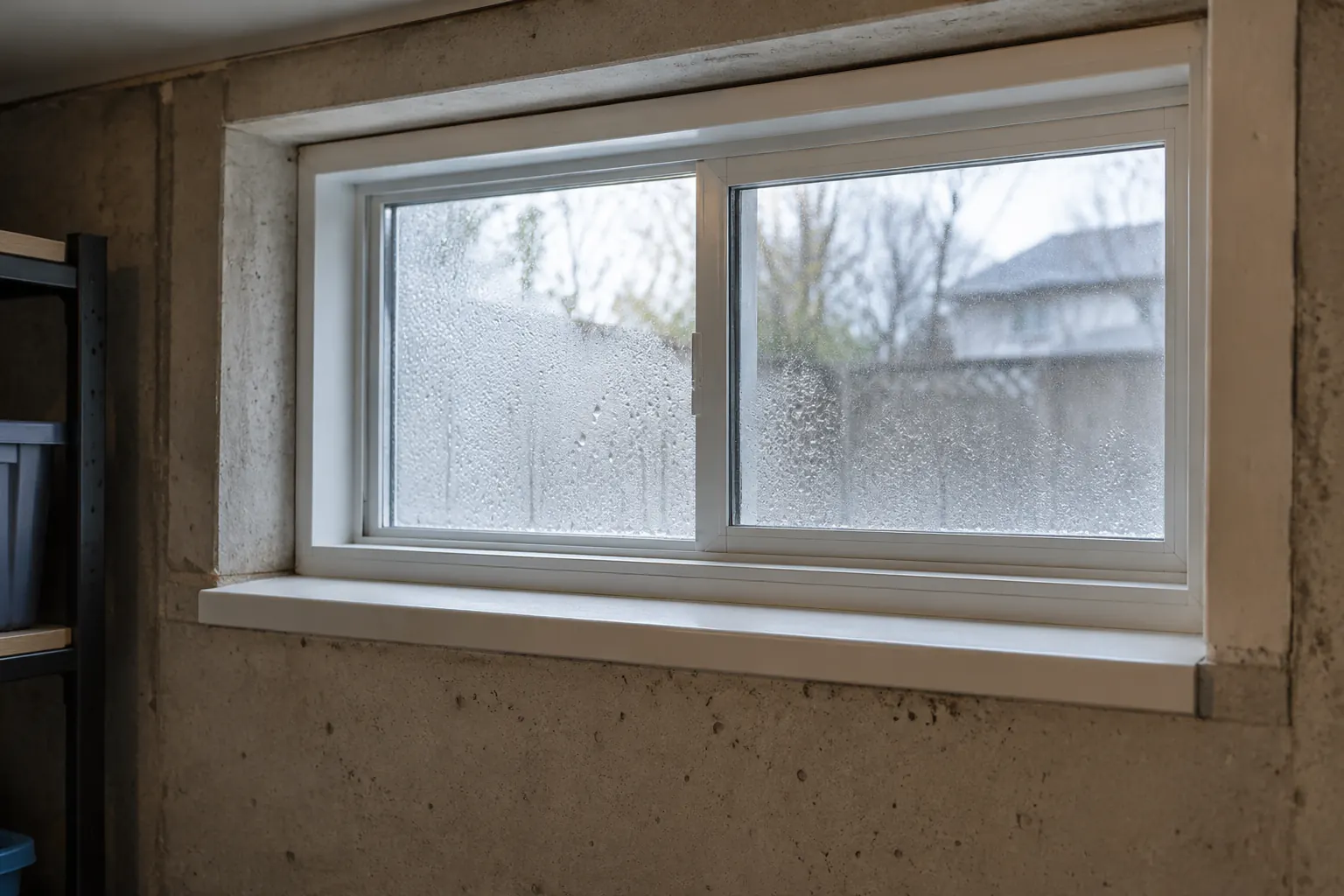
Condensation and a leak are different processes
Condensation occurs when moisture in the air collects as liquid on a sufficiently cool surface. A cool window, pipe or wall may develop droplets even without rain entering through that surface. Liquid-water entry involves water arriving through an opening, joint, material or connected system. Both can occur in the same basement.
The distinction matters because reducing airborne humidity does not seal a crack, and sealing a crack does not automatically control indoor humidity. A useful assessment should explain the evidence for each proposed cause rather than assuming every damp surface needs excavation.
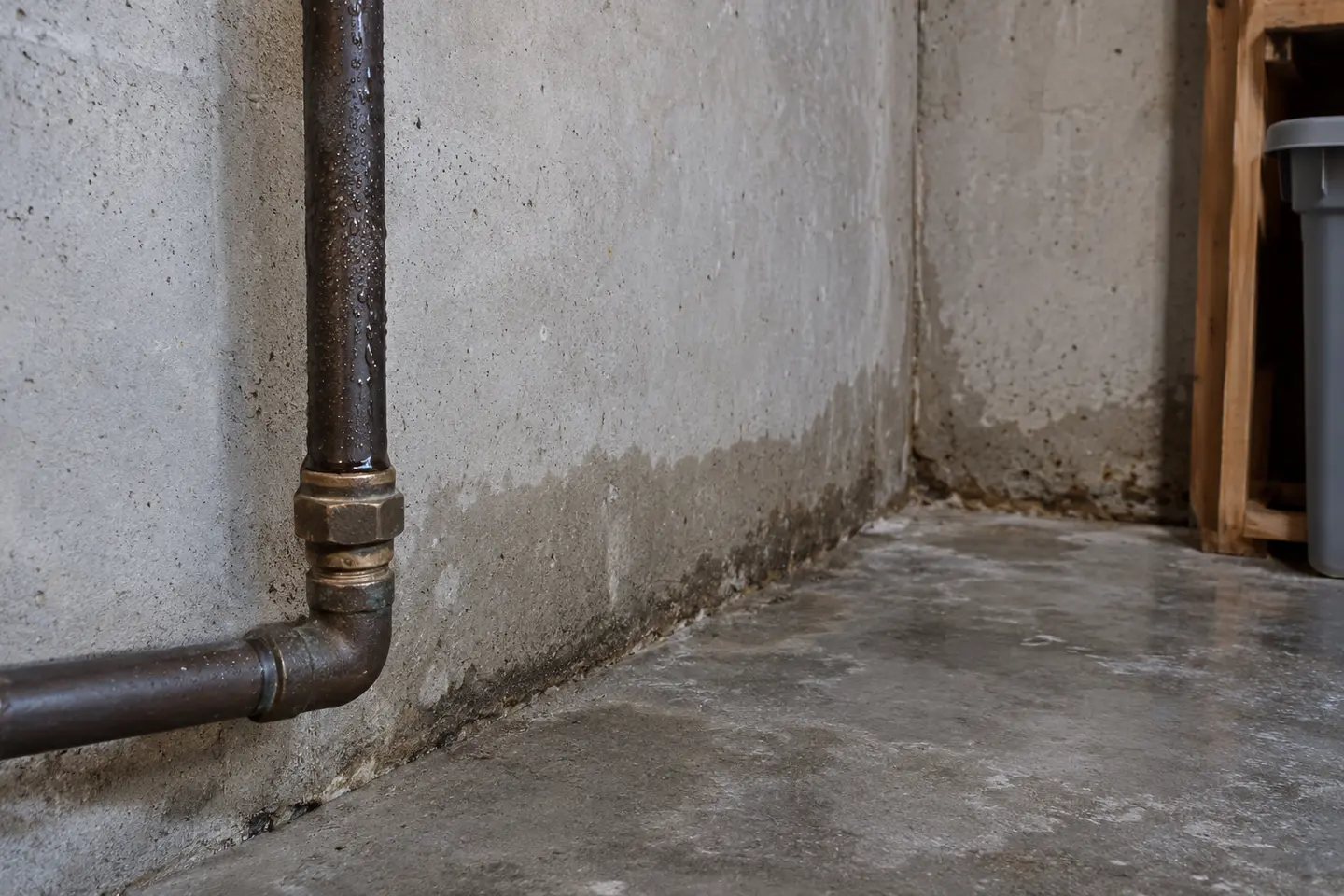
Observe the pattern safely
| What you observe | What it can help discuss | What it does not prove |
|---|---|---|
| Droplets on a cool window or pipe | Surface temperature and airborne moisture | That every nearby damp patch is condensation |
| A wet line following a wall defect | A possible liquid-water route | The full concealed path or structural condition |
| Water appearing after rain | Weather timing and outside drainage | That the nearest crack is the only cause |
| White deposits on masonry or concrete | A history of moisture moving through a material | The current source, severity or repair method |
| A musty smell without visible water | The need to investigate moisture and affected materials | A specific cause or a diagnosis of mould |
Use dates, locations and repeated observations to describe the pattern. If you use a humidity monitor, record its location and readings over time rather than treating one number as a complete diagnosis. No universal instrument reading on this page establishes whether your foundation needs repair.
When rain timing is useful—and when it misleads
Water appearing during or after rain makes exterior routes and drainage worth discussing. It can also coincide with high inflow to a sump or reverse flow in a connected drain. Timing helps organize the assessment, but it cannot identify the route on its own.
In a finished basement, water may travel behind surfaces before it becomes visible. The first wet floor area can be some distance from the original entry. The after-rain guide explains what to record and why the wettest spot may not tell the whole story.
If water follows use of a fixture, or appears independently of weather, plumbing and other building services may need investigation. Tell the contractor about these patterns so the proposed assessment can include the appropriate trade or specialist.
What a dehumidifier can and cannot do
A dehumidifier removes moisture from the air under its intended operating conditions. It can be part of managing a damp basement, particularly when the moisture source and room conditions are understood. Its capacity, drainage, temperature range and maintenance should follow the selected equipment’s instructions.
It does not repair a failed drain, seal a wall opening or prevent reverse flow in a sewer. If water continues to enter, collecting airborne moisture after the fact is not the same as addressing the route. Conversely, a basement can still need humidity management after a particular leak is repaired.
Ask for an explanation of the intended result. “Run a dehumidifier” should not replace investigation of recurring water, and “waterproof the basement” should not be used as a complete answer to every condensation concern.
Ground moisture and crawl spaces
Exposed ground or an incomplete ground-vapour layer can be relevant in a crawl space or mixed basement arrangement. Seams, edges, supports and service penetrations affect continuity, while standing water needs a separate drainage explanation.
Crawl-space waterproofing and encapsulation may involve both water management and a specified vapour-control layer. A liner alone should not be assumed to resolve liquid water, ventilation questions, structural defects or every indoor-air concern.
Existing additions and renovations can create spaces with different construction and access. The property should be assessed as it is built, rather than assigned a moisture problem solely because of its age or neighbourhood.
Finishes can conceal the evidence
Paint, wallboard, insulation and flooring may hide moisture movement. Before removing finishes, agree what needs to be opened, who will do it and how affected materials will be handled. Unplanned removal can make the area harder to use without settling the cause.
If there are concerns about mould, contaminated water, damaged framing or electrical exposure, ask for the appropriate specialist assessment. This guide does not diagnose health effects or tell you to disturb suspect material. Keep clear of water near electrical equipment and follow ESA flood-safety guidance.
Choose a next step that matches the evidence
For visible liquid-water entry, start with basement leak diagnosis. For several routes or a planned renovation, a flood-prevention assessment can help organize the questions. For concerns tied to ventilation, conditioning or a specific appliance, the relevant mechanical professional may need to be involved.
Ask what has been confirmed, what remains uncertain and what the proposed work is intended to change. The repair or equipment choice should follow that explanation. Local permits depend on the actual alterations; our Mississauga guide links to the relevant official starting points.
Moisture questions
Does white powder on a wall prove an active leak?
Mineral deposits can reflect moisture movement, but their appearance alone does not establish the present source or required repair. Include the location and any change over time in the assessment.
Can condensation and rain-related seepage happen together?
Yes. The existence of one moisture process does not exclude another. A proposal should explain which observations support each part of the recommended scope.
What information should I send first?
Describe the surface, timing, visible droplets or flow path and any equipment already in use. Start with a postal code or major intersection; do not send sensitive documents or enter an unsafe area to collect photographs.
A clearer next step
Tell us what is happening in your basement.
Where does the water appear? When did you notice it? Tell us about any existing pump, drain or previous repair. You do not need to choose a waterproofing method before making an enquiry.
Start with your Mississauga postal code or nearest major intersection. Our team will review the concern and confirm the assessment scope before you decide to proceed.
Start with what you see
Request an assessment
A few details help our team understand your basement concern.
We use these details to respond about your basement concern and arrange the appropriate next step. This is a request for contact, not a confirmed appointment. Privacy policy.