
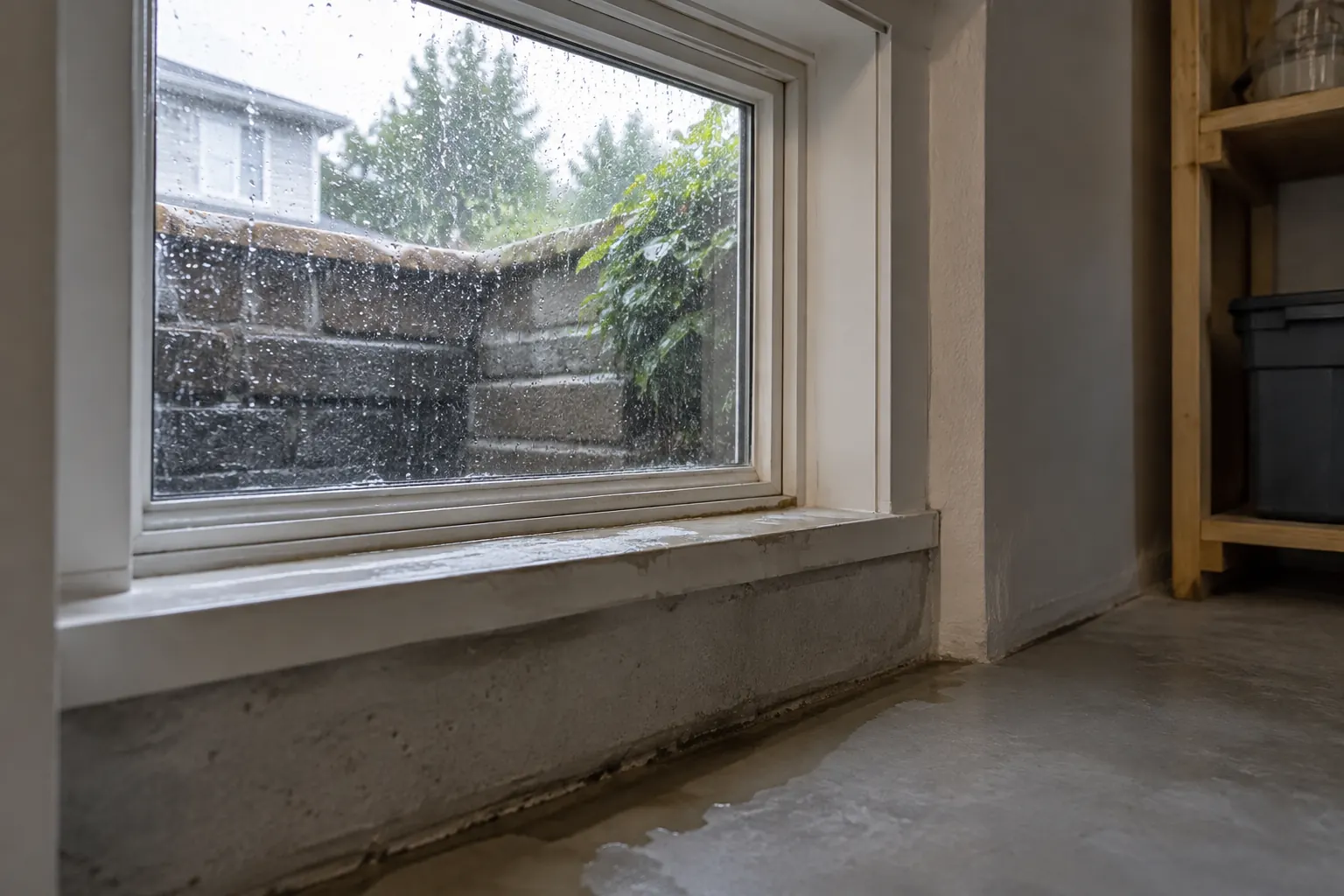
First, decide whether it is safe to observe
Do not enter water that may contact electrical equipment, wiring or a panel. Do not move a plugged-in appliance, reach into a sump or touch wet electrical components to investigate. Follow ESA flood-safety guidance and contact the appropriate emergency or utility professional when the situation requires it.
Water coming through a drain can also raise contamination concerns. Avoid contact and arrange an appropriate assessment rather than treating it as ordinary rainwater. The purpose of the observations below is to help describe an issue safely, not to encourage entry into a flooded room.
This website is not an emergency dispatch service. An online assessment request does not promise immediate attendance. Once immediate risks are addressed, a clear record can help the contractor investigate what happened.
Why the first wet location matters
The first visible water can provide a better clue than the largest puddle later in the event. Water travels toward low points. It can also move behind drywall, beneath flooring or along a joint before becoming visible. The place where it collects may be different from the original entry route.
If you can see the sequence from a safe location, note it in plain language: “the lower window corner became wet before the floor” or “water appeared along the joint beside the stairs.” You do not need to identify a technical cause. A description of what happened is more useful than prematurely labelling it a failed foundation drain.
A basement leak assessment should connect those observations to what can be inspected at the property. Ask the contractor to explain what is confirmed and what remains a possibility.
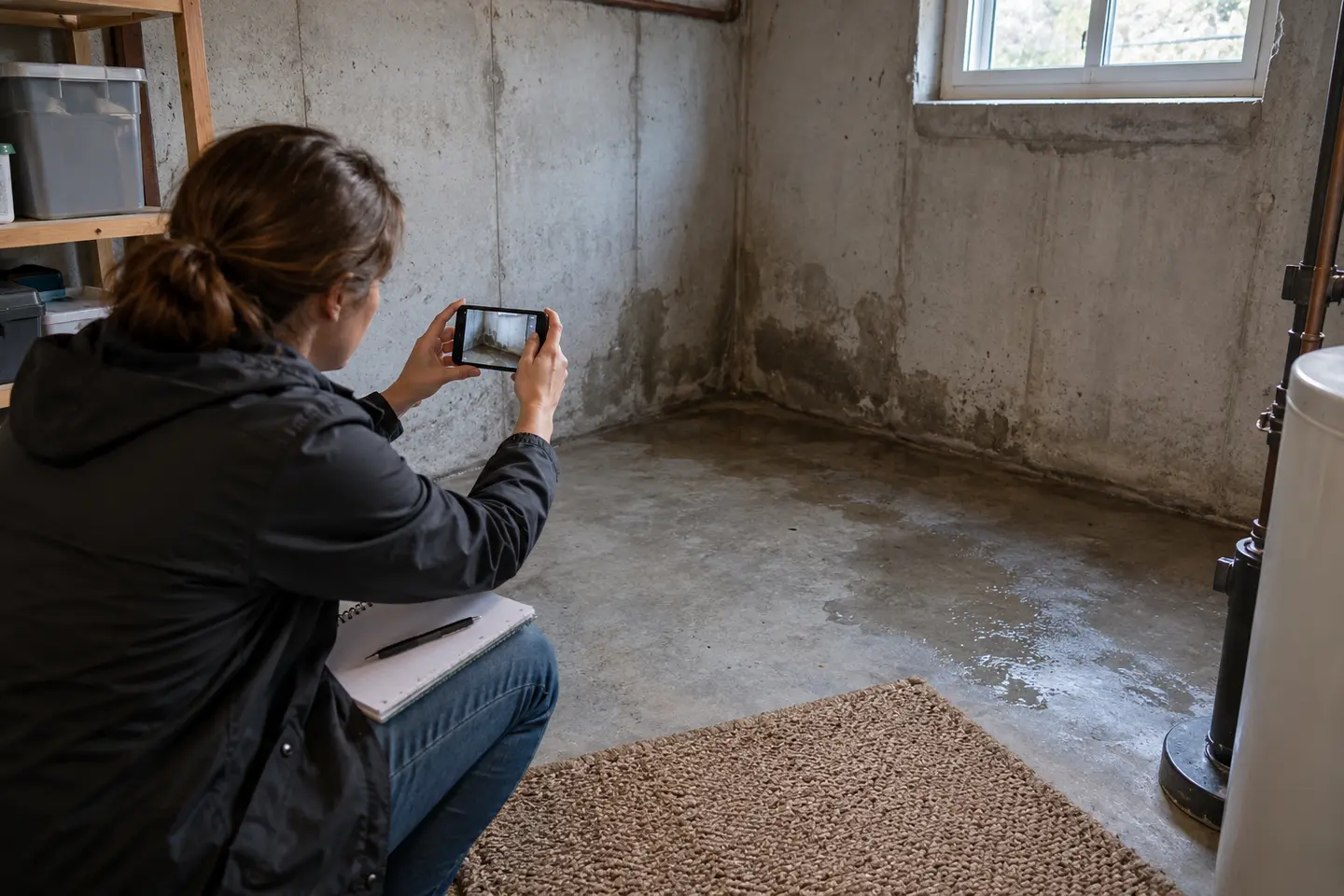
Record timing without assuming that rain proves the route
Write down whether water begins during rainfall, after it stops or after several wet days. Note whether snowmelt, thawing conditions or a power interruption was involved. You do not need exact rainfall measurements or an estimate of the water table to make a useful record.
The relationship may change between events. A small leak after a long wet period may have a different pattern from water entering a window well during a short intense storm. That difference can inform the discussion, but it does not diagnose the property by itself.
If the basement also becomes wet when plumbing fixtures are used, or on otherwise dry days, include that information. Rain may be coincidental with another issue. A good assessment considers the full pattern instead of fitting every observation into the first theory.
Look at the type of entry point you can safely see
| Visible starting point | Information to record | Question for the assessment |
|---|---|---|
| Wall crack or penetration | Location, visible wet path and whether the surrounding area is dry | Does this detail explain the full route, and what is behind or outside it? |
| Wall-floor joint | Which section becomes wet first and how far the wet line extends | What is known about collection, foundation drainage and the outlet? |
| Basement window | Whether the sill, frame or wall below becomes wet first | Is the well filling, the assembly leaking or another path involved? |
| Sump area | An alarm or changed behaviour that can be observed safely | Are pump, controls, incoming drainage and discharge working as intended? |
| Floor drain | Whether water appears to rise through the drain | Which pipe is affected and is reverse flow involved? |
A table like this organizes the enquiry. It is not a set of rules for choosing a repair without inspection. Several observations can belong to the same event, and one visible mark may reflect an older condition rather than the current source.
A basement window needs more than a glance at the glass
If visible from a safe position outside, note whether the well contains pooled water or debris and whether nearby surfaces direct runoff toward it. The well, its drain, the surrounding grade and the window opening are separate parts of the assessment.
Do not assume that stone in the well proves drainage is working. Equally, a wet sill does not prove that the underground well drain is the only issue. The window assembly or frame-to-wall detail may be involved.
The window-well drainage page explains these distinctions and the limits of covers. It also separates drainage repairs from window enlargement and egress requirements, which are different questions.
Downspouts and surface water: describe what is visible
Near-house surface flow can be relevant. If safely visible, note whether a downspout discharges toward the affected area, whether a paved surface slopes toward the house or whether water collects beside a below-grade opening. Do not climb onto a roof or enter an excavation to follow the route.
Mississauga’s stormwater-at-home guidance explains why existing connections and surface routing deserve attention. Some connections may be concealed, and their destination cannot be established just by looking at a downspout above ground.
Avoid making unplanned changes that send water onto neighbouring property or alter an unknown underground connection. Discuss the complete route and any applicable requirements before treating a quick redirection as the final solution.
Distinguish a floor-drain concern from wall seepage
Water rising through a floor drain calls for investigation of the connected plumbing route. Sealing a wall crack does not address reverse flow in a separate pipe. Similarly, adding a valve does not repair water entering through a window or foundation joint.
If several routes are suspected, a flood-prevention assessment can help organize the scope and identify the appropriate trade. Ask which investigation is included and whether additional testing requires a separate authorization.
Pump-related concerns also need a system view. A pump that changes its running pattern during rain may be receiving more water, facing an outlet restriction or experiencing another issue. Do not reach into the pit to decide which explanation is correct.
Keep a short, usable record
A simple note is enough. Include the date, location, timing, recurrence and known earlier repairs. If photographs can be taken safely, keep the original files and a wider view for context. Avoid moving through water to obtain a better angle.
Record what is known separately from what you suspect. “Water first seen below the window” is an observation. “The window drain is blocked” is a conclusion that may still need checking. Keeping that distinction helps the assessor evaluate alternatives.
Do not send sensitive documents in the initial enquiry. Your name, contact information, a postal code or major intersection and a brief description are enough to begin. The contractor can explain any further information needed and an appropriate way to share it.
What an assessment can add
The contractor may review visible interior and exterior conditions, existing drainage and equipment, repair history and access limitations. Concealed areas can require agreed investigation. A dry visit may not reproduce an intermittent leak, so the record of earlier conditions can be valuable.
The recommendation should identify the intended repair route and explain why it fits the findings. A limited defect may support a targeted repair; a broader collection or wall-treatment scope may be considered in other situations. Read the interior-versus-exterior comparison after the route has been discussed, rather than choosing a method solely from a puddle.
If the problem is mainly droplets on cool surfaces or dampness without a visible flow path, the moisture guide can help prepare a different set of questions.
Questions after a rain-related leak
Should I wait for another storm before contacting someone?
You can request an assessment with the information already available. The contractor can explain whether more observation would help. Do not delay an appropriate response to a safety issue while trying to document a pattern.
Can one photo establish the repair?
A photo can show a visible condition. It cannot confirm concealed connections, the complete water path or structural stability. Ask how the recommendation will be verified at the property.
What should my enquiry say?
State where water first appeared, when it happened and what you know about pumps, drains or previous work. Request a leak assessment without assuming a particular method.