
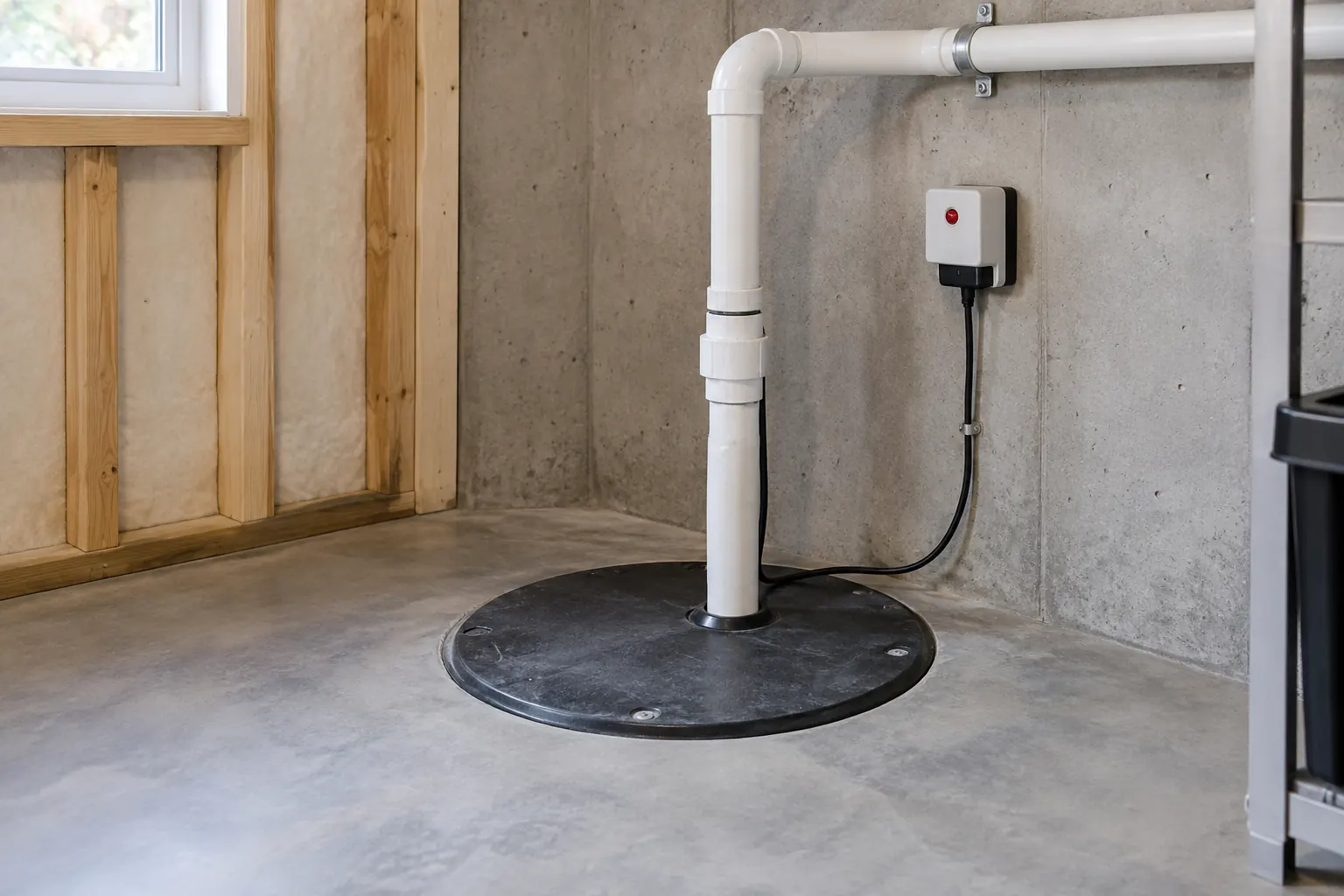
Do not handle wet electrical equipment
If water may contact the pump’s electrical supply or other equipment, keep clear. Do not reach into the pit, move a plugged-in device or touch a panel in an affected area. Use the appropriate emergency or utility response and follow ESA flood-safety guidance.
The observations in this guide are for preparing a discussion. They are not instructions for dismantling equipment, testing live circuits or opening a system during flooding. A routine online enquiry does not promise emergency attendance.
Once conditions allow a safe assessment, the contractor can review the pump as part of its connected arrangement. The sump installation and replacement page explains that full scope.
Compare the behaviour with what you normally notice
The most useful starting point is a change: an unfamiliar sound, shorter cycles, longer running or an alarm that was not previously present. Note when it began and whether it coincided with heavy rain, a power interruption or recent work.
A pump may run more often when more water reaches the pit. That observation alone does not prove a fault. Equally, a quiet pump does not prove that every part of the collection and discharge system is working. The timing and water conditions provide context for an assessment.
Avoid assigning a cause before the system is checked. “The pump started every few moments during the storm” gives the contractor a more useful description than “the motor is worn out,” unless a qualified inspection has already established that conclusion.
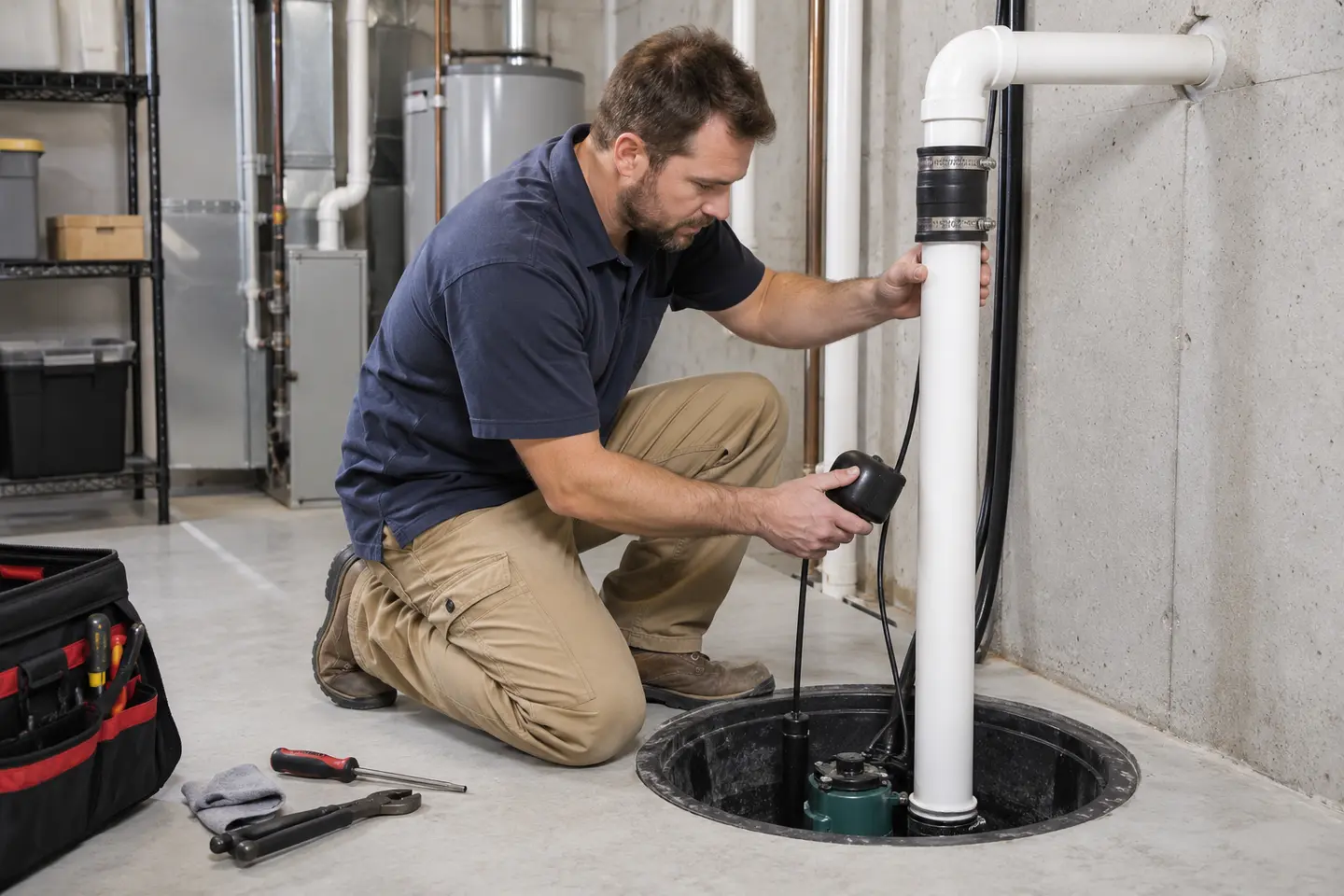
What common observations can lead an assessor to check
| Observation | Possible assessment topics | What you should avoid assuming |
|---|---|---|
| Frequent starts and stops | Inflow, pit volume, float arrangement and return flow | That the motor alone is responsible |
| Long or continuous running | Water arriving, discharge resistance and equipment performance | That a larger pump is necessarily the answer |
| High-water alarm | Actual level, power, controls, pump and outlet | That the alarm itself removes water |
| Changed noise or vibration | Equipment condition, supports and connected piping | That sound identifies a specific internal defect |
| Water beside discharge piping | Joint condition, routing and the visible leak point | That replacing the pump fixes the piping |
| No expected operation | Power, controls and whether water is reaching the trigger condition | That age alone explains the behaviour |
Several conditions can produce the same observation. The table is a discussion aid, not a remote fault diagnosis. Tell the contractor what you could see safely and what remains unknown.
Separate the pump from its collection system
A pump can only move water that reaches its pit. If basement water is appearing elsewhere, the incoming drainage or a different entry route may need investigation. Replacing the pump cannot seal a wall opening or connect an unrelated wet area to the collector.
The foundation-drain guide explains why collection location, condition and outlet should be identified. A broader flood-prevention assessment may help where windows, surface runoff, foundation entry and sewer backup all need discussion.
Ask which connected components are included in the pump assessment. A quotation that names a replacement model but says nothing about the existing pit or outlet leaves an important part of the reasoning unclear.
The discharge route can change the decision
A pump’s duty depends partly on how far and how high it must move water and the resistance along the discharge arrangement. Pipe routing, restrictions and the receiving location can affect performance. Selection should follow actual operating conditions and manufacturer requirements.
The outlet should send water to an appropriate location without returning it to the foundation or creating problems for another property. Weather-related conditions and accessibility for maintenance are also worth discussing. Do not assume an existing outlet is suitable merely because the previous pump used it.
Ask what the contractor has verified about the route and whether any modification is included. A new pump placed into an unsuitable connected arrangement may leave the important limitation unchanged.
What may support a repair or adjustment?
An assessment may identify a serviceable component, control arrangement or connected-piping issue that can be addressed without replacing the whole installation. The appropriate choice depends on the findings, equipment condition, available parts and manufacturer information.
Ask what was found, what the proposed repair changes and what performance or operational check will follow. The explanation should identify any remaining uncertainty. A small repair is not automatically sufficient, but replacement is not automatically necessary either.
Avoid expecting an online guide to prescribe a part. The same visible symptom can arise from different arrangements, and work on electrical or mechanical equipment belongs with the appropriately qualified person.
What may support replacement?
Replacement may be considered when the equipment’s condition, suitability or serviceability no longer fits the assessed needs. The contractor should explain the basis rather than relying on an unsupported universal lifespan claim.
A replacement scope should identify the pump, controls, check valve, pit or cover changes and any discharge work. It should also state which existing components are retained and why. If electrical alterations are needed, clarify who performs them and the applicable ESA notification process.
Ask for the selected model’s instructions and maintenance requirements. Keep the model information, installation date and scope with your household records. Those details make later service conversations more useful than remembering only that a “new sump” was installed.
Backup equipment and alarms have different jobs
An alarm provides notice of a condition. It does not pump water. A backup pump or power arrangement may support operation under specified circumstances, but it has limits that depend on capacity, power availability, charging or supply conditions and the connected discharge.
Ask what failure or interruption the proposed backup addresses. Does it share a discharge route with the main pump? What maintenance and checking does it need? How will you know it requires attention? The answers should relate to the actual system and selected equipment.
Do not treat backup equipment as proof that flooding cannot occur. Water can arrive through routes outside the sump arrangement, and common components may still affect both primary and backup operation.
Keep equipment accessible after renovations
A pump installation can be technically serviceable yet inconvenient to reach because of storage, flooring or built-in cabinetry. Discuss access before finishing the room. Covers, controls and serviceable piping should remain reachable in the way the system requires.
Ask who will demonstrate the intended maintenance access and which tasks the homeowner may safely perform under the manufacturer’s instructions. Avoid a generic maintenance promise that is disconnected from the equipment actually installed.
If a service visit needs finishes opened, include their reinstatement in the proposal. The cost of a pump alone does not describe the complete access or restoration scope.
Local rebate questions belong after the connection is identified
A new pump is not automatically an eligible municipal measure. The relevant existing drainage connection and proposed disconnections determine which rules to check. Interior waterproofing systems have an important exclusion under the City’s prevention program.
Use the Mississauga rebate and permit guide before relying on assistance in the budget. Application timing and official approval are separate from choosing the equipment or receiving a contractor’s quotation.
Bring these questions to the assessment
- What explains the observed change, and what remains unconfirmed?
- Which pit, collection, control, discharge and power components were assessed?
- Why is repair or replacement the recommended next step?
- Which components remain, and are they suitable for the proposed arrangement?
- What is included in testing, disposal, electrical work and restoration?
- What instructions, access and maintenance does the finished system need?
Request a pump assessment with the behaviour you noticed and when it changed. You do not need to guess the failing component before making contact.