
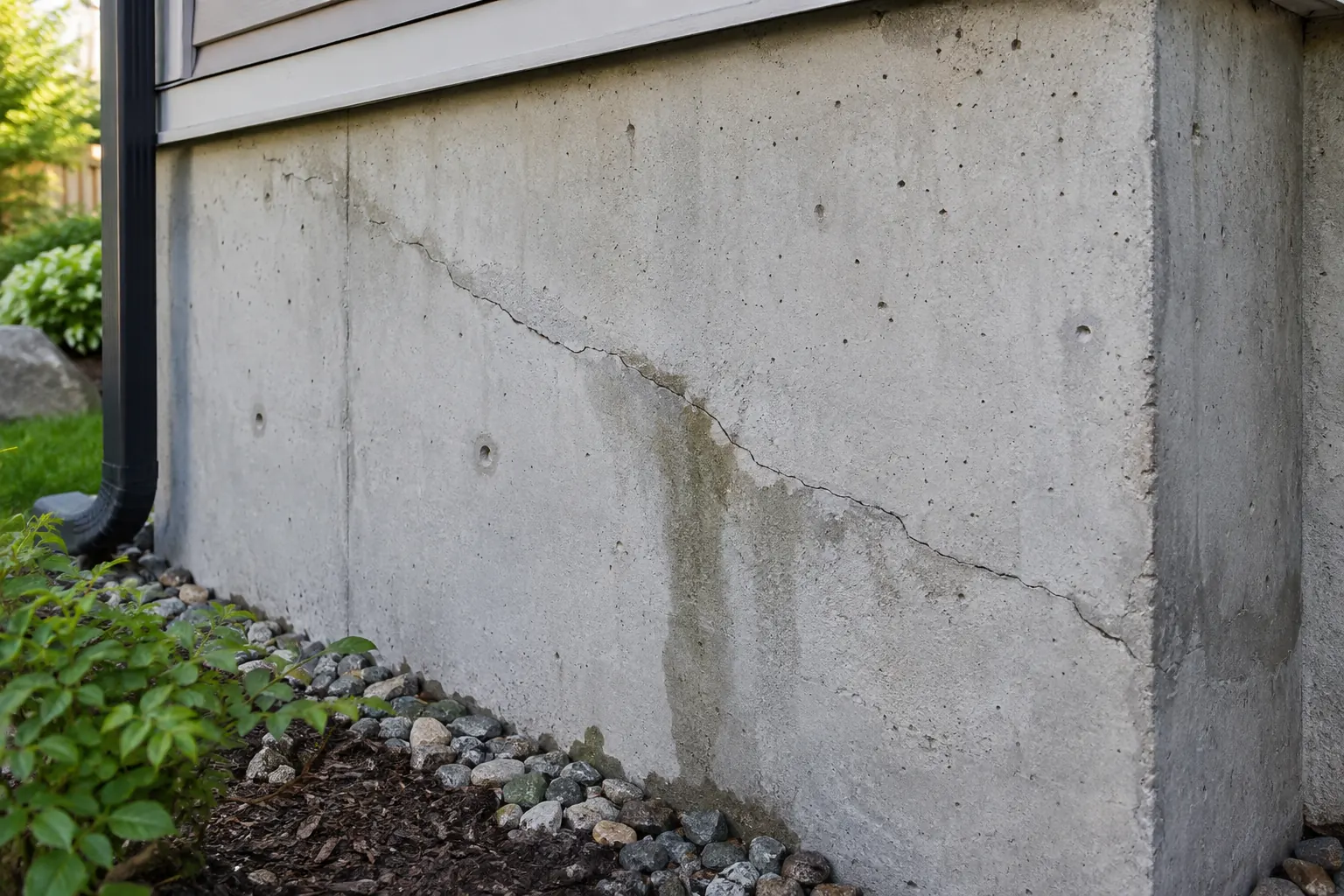
A visible crack does not tell the whole story
A crack can be an identifiable route for water, but it may not explain every wet area nearby. Water can follow a construction joint, a service penetration or a concealed path behind finishes before it becomes visible. A stain can also remain after an earlier event has dried.
Tell the contractor what you observed: where the wet line begins, when it appears and whether the pattern has changed. Dated photographs or notes can help when available from safe access. Avoid enlarging a crack, scraping a coating or removing a finish to make the condition look clearer for an enquiry.
The foundation crack service page explains the commercial assessment scope. This article focuses on the variables behind a recommendation, so you can ask why one approach is being proposed.
Poured concrete and masonry need different reasoning
A poured-concrete wall forms a different repair substrate from a block or other masonry foundation. A line through concrete, a mortar-joint defect and a route through the spaces within a block wall can behave differently. The contractor should identify the construction before selecting a method.
An injection technique may be assessed for a suitable poured-concrete crack. That does not mean the same approach suits every masonry joint or concealed cavity. Ask what route the material is intended to seal and how the contractor can reach it.
Coatings, paint, old patching and repair materials may affect both observation and preparation. A neat repair line on the surface does not show the full condition behind it. The quotation should state how previous work is handled and whether additional exposure is required.
What is known about change or movement?
The purpose of a leak repair is to address water passing through an assessed route. Establishing why a crack formed or whether the structure continues to move is a separate question. One task should not be silently substituted for the other.
Tell the assessor about changes you have noticed, recurring damage, displacement or related movement concerns. Those observations may justify review by a suitably qualified professional. An online photograph cannot provide structural clearance, and this guide does not assign a safety category from a crack’s direction or apparent width.
Ask whether the contractor is quoting water sealing only. If structural evaluation or repair is needed first, identify who will provide it and how the resulting advice affects the waterproofing detail. A dry surface after sealing would not by itself prove that movement has stopped.
Injection is a method, not a universal answer
Injection involves introducing a specified material into an assessed crack or void. The chosen system, preparation and access need to fit the wall and intended function. Polyurethane and epoxy are broad material families with different possible properties and applications; the name alone does not settle suitability.
Ask the contractor to explain the product’s purpose in this particular repair. Is the scope intended to seal a water route, address another specified function, or form part of a larger engineered repair? The answer should be consistent with the material instructions and professional scope.
Avoid comparing quotations only by the material label. Two injection proposals may include different preparation, access, crack extent or follow-up provisions. Equally, a method that works for an accessible concrete crack should not be presented as the default for every foundation type.
When outside access changes the option
Exterior access can allow the wall condition and water-entry detail to be treated from outside. That may involve excavation, preparation, a compatible repair and waterproofing detail, protection and surface reinstatement. It needs a complete scope rather than the vague statement “seal it from outside.”
A deck, driveway, narrow side yard or property boundary can affect whether access is practical. Shared or neighbouring space requires the appropriate permission. The contractor should explain the working area and how the new detail meets the surrounding wall treatment.
If several wall defects or a broader outside condition are involved, exterior foundation waterproofing may become part of the discussion. One visible crack does not automatically justify a full perimeter excavation; the findings should support the recommended extent.
Finished walls can hide both evidence and access
Drywall, insulation, framing and trim can conceal the foundation face. The first visible dampness may appear at a baseboard or floor even when the original route is higher or farther away. Access needed for assessment may therefore differ from the small visible stain.
Agree which finishes need to be opened, who will do it, how the area will be protected and what replacement is included. Removing finishes and restoring the room are different tasks. A crack-repair price may not include all of the surrounding finish work unless it says so.
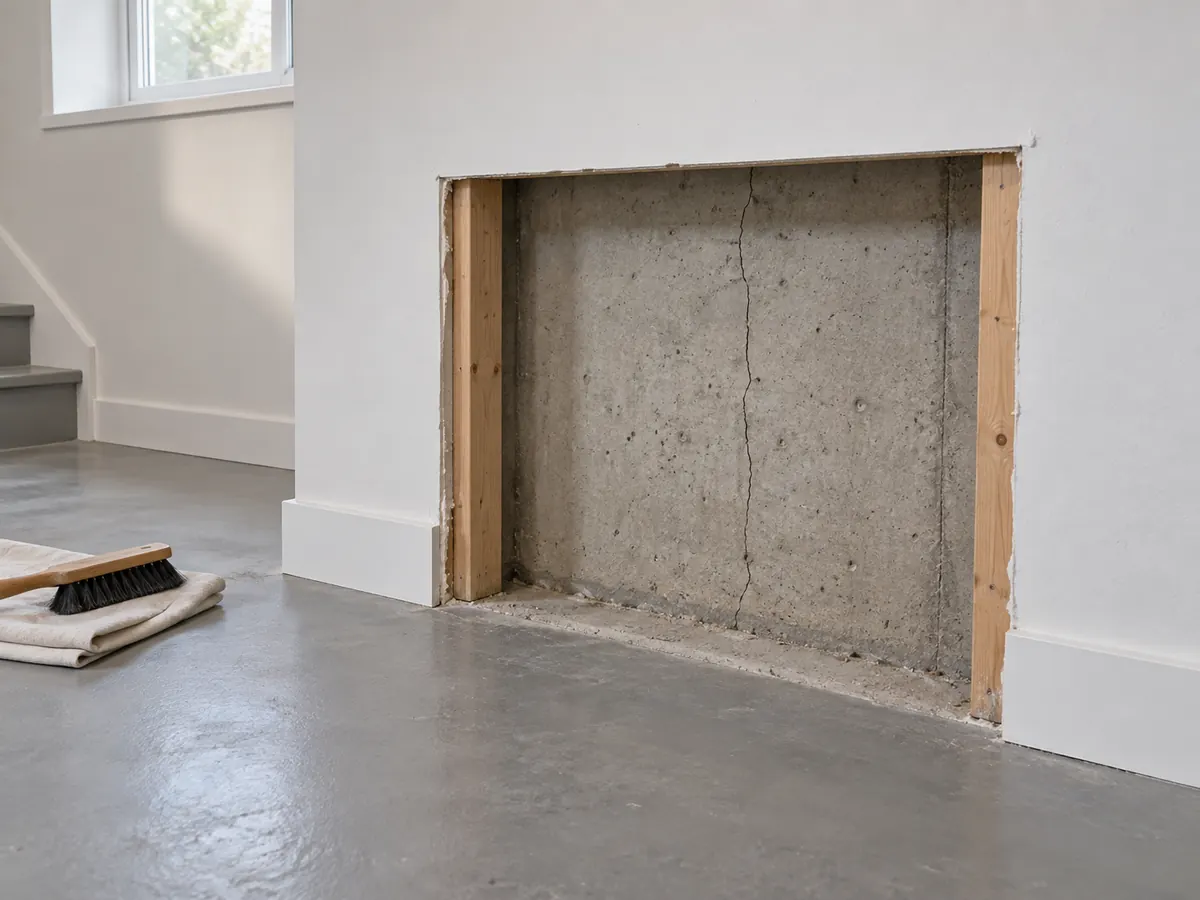
If damaged or suspect materials are found, ask whether another specialist is needed. Sealing an entry route does not automatically restore affected finishes or address every moisture-related concern. Do not disturb suspect materials solely to prepare a photograph.
Previous repairs are useful context
Tell the contractor about known injections, patching, coatings or exterior work. If you have the old scope or invoice, it may identify which area was treated and what materials or terms applied. A statement that the basement “was waterproofed” does not reveal the exact work.
A recurring leak can have several explanations. The original route may remain, conditions may have changed or water may now be following a different path. Ask what evidence supports the current recommendation rather than assuming the earlier repair proves every possible cause.
If an existing provider’s written terms may apply, review that process before authorizing unrelated work that could affect the covered area. This guide does not interpret or guarantee another company’s written coverage.
Use a scope checklist before comparing prices
| Item | What a clear proposal should state |
|---|---|
| Assessed route | Which crack or detail is included and what evidence supports it |
| Construction | Wall material and relevant previous treatment |
| Repair purpose | Water sealing and any separately defined structural involvement |
| Preparation and method | Exposure, cleaning and specified repair system |
| Access | Interior finishes or exterior excavation needed |
| Restoration | Concrete, drywall, flooring, landscaping or other affected surfaces |
| Terms | Written coverage, exclusions, maintenance and recurrence reporting |
Read the cost guide when proposals differ. A per-crack number may leave out access, preparation and restoration. The useful comparison is the complete agreed task.
Questions for the contractor
Ask what has been directly observed, what remains concealed and whether the proposed method can address the full route. Ask why another method is not being recommended and whether any specialist evaluation should come first. These are practical questions, not a request for a remote guarantee.
The contractor should also identify any approval requirements arising from the full work. A localized water-sealing label does not settle the requirements for excavation, structural changes or other work that may be added to the proposal.
When the cause is still uncertain
If the crack is dry while water appears elsewhere, or several routes are possible, a broader leak assessment may be needed. A photograph can support that conversation but cannot reveal concealed connections or confirm the foundation’s stability.
Request a crack assessment with the wall material if known, the visible wet location, the timing and any previous repair history. The contractor can confirm the next step and the scope they are qualified to provide before you authorize work.